아침 7시를 알리는 시그날 음악이 스마트폰에 깔린 어플리케이션 콩(Kong)에서 흘러나오는 시간에 산책을 시작합니다. 현관에서 5분이면 소나무 숲으로 들어서는 아름다운 동네에 살고 있습니다. 숲에 도달하기 전에 소를 키우는 농가, 그래서 늘 바쁜 정 씨, 하지만 언제나 유머를 잃지 않는 분이 오늘도 그 집 앞을 지나가는 우리를 보고 한 마디 합니다. “뒤따라갈게요!” 하지만 그것은 그분의 마음뿐이라는 것을 알고 있습니다. 무릎이 좋지 못해서 산길을 걷는 것은 이제 불가능합니다. 하지만 바쁜 농촌 삶을 살면서도 언제나 이웃사람을 보면 한 마디씩 농담을 해서 우리를 즐겁게 합니다.
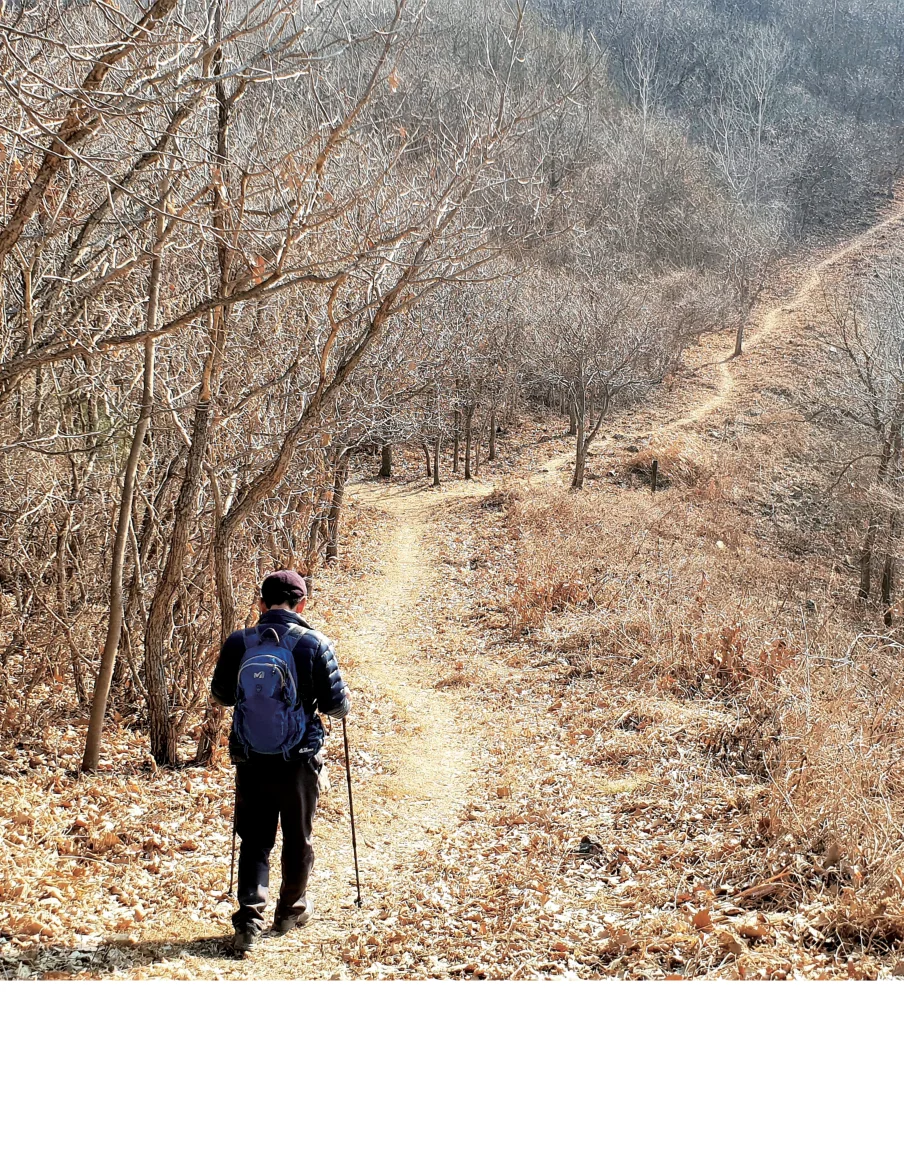
집을 나서 벼가 자라는 논들을 보면서 논둑에 핀 분홍색 메꽃이며 하얀 인동초 꽃이며 노란 낮달맞이 꽃과 아침인사를 나누다보면 이내 아마 30 년은 넘은 키 큰 소나무 숲으로 들어서고, 고사리뿐만 아니라 이름 모를 잡초가 무성한 길을, 어제 부직포를 깔았기에 가뿐하게 통과하면, 본격적인 첫 번째 숲속 길을 걷습니다. 이 길 가에는 보라색 비비추나 야생 원추리가 곳곳에 피어서 반깁니다. 그 숲을 통과하면 농로지만 시멘트 포장이 된, 손을 잡고 걸을만한 비교적 큰길이 나옵니다. 그 길 좌우에 있는 밭에는, 식사를 하지 않고 아침 일찍 나와서 더워지기 전에, 밭일을 하는 할머니들을 가끔 만나면 안부를 묻기도 하고, 두 사람이 함께 다닌다고, 부러움 섞인 놀림을 받기도 합니다.
오늘은 두 분 할머니를 만나지 못하고 숲으로 난 큰길이 끝나는 지점에서 밭일을 하고 계신 아저씨에게 말을 건넵니다. “일찍 나오셨네요. 오늘은 아침부터 덥네요!” 그러면서 어디에 사시는지를 물었더니 신정동에 산다고 하시며 “젊을 때는 농사일이 하고 싶어서 밭을 샀는데 지금은 나이가 드니 짐이 되네요.”라고 고백을 합니다. 참으로 솔직한 고백인가 봅니다. 다른 쪽에도 교장선생님으로 은퇴를 하면서 2,3천 평되는 밭을 사서 처음에는 자주 일을 하시던 분도, 요즈음은 현저하게 보기가 뜸해 졌고, 땅도 반을 잘라서 팔았다고 합니다. 정말 선생님도 꿈을 이루기 위해서 밭을 샀겠지만, 아내 되는 사모님은 가끔 따라 밭으로 오실 때보면, 수건으로 얼굴을 덮어쓰고, 남편과 주고받는 대화를 듣는지 마는지, 우리에게 눈길 한 번 주는 법이 없습니다.
한 시간 남짓 산길을 걸으며 아내와 이런저런 이야기를 나눌 수 있으니 얼마나 감사한지 모릅니다. 아저씨의 밭을 지나서 또 다른 산길로 접어들면 산소가 몇 개 나오고 대숲을 지나면 시원하고 멋진 산길이 나옵니다. 제 바람은 겨울에 눈이 그 길을 덮으면, 비닐 비료부대 하나 구해서, 오궁(오리 궁둥이)썰매를 타는 것인데 여건이 안 되어 몇 년째 기다리고 만 있습니다. 그 시원하고 멋진 길을 거의 올라가니 산비둘기 하나가 나타나 바로 몇 걸음 앞에서, 우리 걸음에 맞추어 길을 안내합니다. 한 2,30 미터를 날아가지도 않고 같은 거리를 두고 안내를 하니 염려분과 위원장께서, 어데 아파서 날지 못하는 비둘기가 아닌가 하고 말하자마자 알아듣기라도 한 듯 숲속으로 날아오릅니다. “염려 놓으세요, 위원장님” 그렇게 여는 하루로 인해서 기쁨 기도 감사의 날을 맞이합니다.
I begin my morning walk right when the 7:00 a.m. chime rings from the Kong radio app installed on my smartphone. We live in a lovely neighborhood where just a five-minute stroll from our front door brings us into a pine forest. Before reaching the woods, there is a cattle farm run by Mr. Jung, who is always busy yet never loses his good humor. Seeing us walk by his house again today, he calls out cheerily, “I’ll catch up with you soon!” But we know well that it is simply a warm thought in his heart. His knees have grown too frail for him to walk mountain trails anymore. Even amidst his demanding rural life, however, he always brings joy to our mornings with a warm-hearted jest whenever he spots his neighbors.
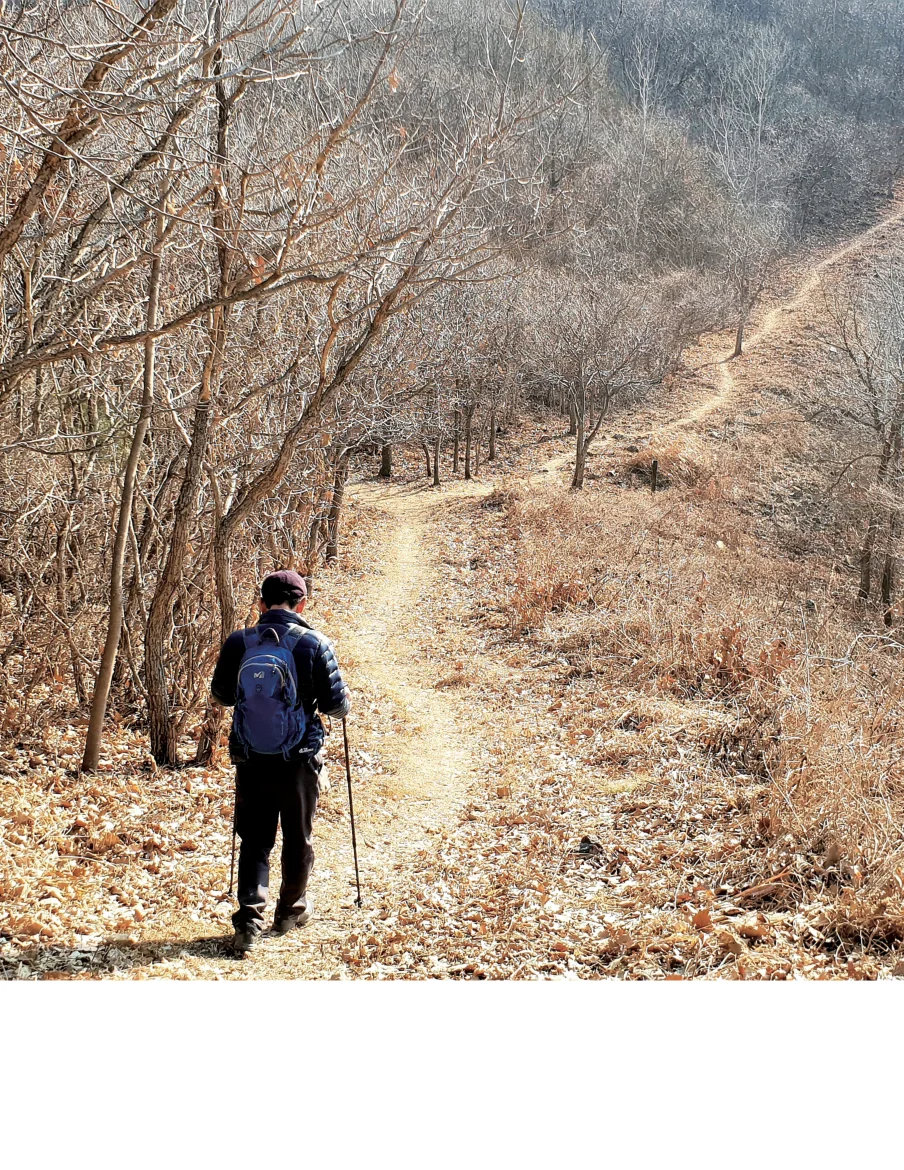
Stepping out of the house and gazing upon the paddies where rice plants are growing tall, I exchange silent morning greetings with the pink false bindweeds along the dikes, the white honeysuckle blooms, and the bright yellow evening primroses. Soon enough, we step into a pine forest of tall trees that must be well over thirty years old. Thanks to weed barrier fabric laid down just yesterday over a stretch overgrown with bracken and nameless wild grasses, we pass along effortlessly and step onto the first proper forest trail. Along this path, purple plantain lilies and wild daylilies greet us here and there in cheerful bloom. Emerging from the woods, we find a paved farm road wide enough to walk hand in hand. On the fields flanking this road, we occasionally meet elderly grandmothers who have come out early without breakfast to tend their crops before the day turns stifling; we trade friendly greetings, and sometimes receive envious, good-natured teasing about how sweet we look walking together as a couple.
Today, without running into the grandmothers, I strike up a conversation with a gentleman working his plot right where the wide trail to the woods comes to an end. “You’re out early! It’s already getting warm this morning!” When I ask where he lives, he tells me he lives in Sinjeong-dong, confessing candidly: “When I was younger, I bought this field because I longed to farm, but now that I’m older, it has become quite a burden.” It felt like a genuinely heartfelt confession. On the other side of the road, a retired school principal had also bought a plot of two to three thousand pyeong and worked it diligently at first, but lately he is seldom seen, and I heard he has already cut the land in half and sold it. No doubt that teacher also bought the land to pursue his dream, but whenever his wife accompanied him to the field, her face wrapped entirely in a towel, she seemed hardly to listen to their conversation and never cast so much as a glance our way.
Walking along the mountain trail for about an hour and sharing all sorts of conversations with my wife fills my heart with immense gratitude. Passing the gentleman’s field and turning onto another mountain path brings us past a few ancestral graves, and after winding through a bamboo grove, a delightfully cool and scenic trail unfolds. My quiet wish is that when winter covers that path in snow, I might get hold of an empty vinyl fertilizer sack and ride down on an “ostrich-tail” sled; circumstances have not allowed it yet, so I have been waiting for years. As we near the top of that refreshing, scenic path, a mountain dove appears just a few paces ahead, matching our pace as though guiding the way. When it gently leads us on for twenty or thirty meters without taking flight, my wife—the esteemed “Chairperson of the Worry Committee”—wonders aloud if the bird might be hurt and unable to fly. Yet as if understanding every word, it immediately flaps its wings and soars up into the forest canopy. “Rest easy, Madam Chair!” With a morning welcomed in such joy and warmth, we embrace another day filled with delight, prayer, and thanksgiving.
Ek begin my oggendwandeling net wanneer die seintjie vir sewe-uur die oggend uit die Kong-toepassing op my slimfoon opklink. Ons woon in ’n pragtige buurt waar ’n mens binne vyf minute van die voordeur af in ’n dennebos instap. Voor ons die bos bereik, is daar ’n beesplaas wat behoort aan mnr. Jung—altyd besig, maar iemand wat nooit sy humorsin verloor nie. Toe hy ons vanoggend weer by sy huis sien verbystap, roep hy vrolik uit: “Ek sal julle binnekort inhaal!” Tog weet ons goed dat dit bloot ’n hartlike wens van hom is. Sy knieë is nie meer goed nie, so om teen die berghange uit te stap is vir hom nie meer moontlik nie. Maar te midde van sy besige boerderylewe het hy altyd ’n grappie gereed vir sy bure om ons oggend op te beur.
Terwyl ons die huis verlaat en uitkyk oor die ryslande waar die graan opskiet, groet ek die pienk akkerwinde langs die walle, die wit kamperfoelieblomme en die geel aandblomme. Kort voor lank stap ons ’n woud van hoë dennebome binne wat sekerlik al ouer as dertig jaar is. Danksy onkruiddoek wat gister oor die varings en welige veldgras gelê is, stap ons sonder enige moeite daaroor en betree die eerste ware bospad. Langs hierdie paadjie verwelkom pers hartlelies en wilde daglelies ons oral in vrolike blom. Wanneer ons deur die bos kom, bereik ons ’n geplaveide landboupad wat breed genoeg is om hand aan hand te stap. In die landerye weerskante van die pad sien ons soms oumas wat douvoordag sonder ontbyt uitgekom het om te skoffel voor die hitte toeslaan; ons groet mekaar vriendelik, en soms terg hulle ons met goeie jaloesie oor hoe soet ons twee as egpaar saam wandel.
Vandag het ons nie die twee oumas raakgeloop nie, maar by die punt waar die breë bospad eindig, knoop ek ’n geselsie aan met ’n oom wat op sy landjie werk. “U is vroeg uit! Dit is vandag sommer van vanoggend af al warm!” Toe ek vra waar hy woon, sê hy dat hy in Sinjeong-dong bly, en bely openhartig: “Toe ek jonk was, wou ek so graag boer dat ek hierdie stuk grond gekoop het, maar noudat ek ouer word, het dit ’n las geword.” Dit was waarlik ’n eerlike ontboeseming. Aan die ander kant van die pad was daar ook ’n afgetrede skoolhoof wat ’n stuk grond van twee- tot drieduisend pyeong gekoop het; aan die begin het hy gereeld daar gewerk, maar deesdae sien ’n mens hom bitter min, en na verneem word, het hy reeds die helfte van die grond afgesny en verkoop. Daardie onderwyser het sekerlik ook die grond gekoop om sy droom te verwesenlik, maar wanneer sy vrou hom af en toe na die veld vergesel het, met haar gesig heeltemal in ’n handdoek toegedraai, het sy kwalik na haar man geluister en ons nooit eens ’n blik gegun nie.
Om so ’n goeie uur lank op die bergpaadjie te wandel en allerhande gedagtes met my vrou te kan deel, vul my hart met onbeskryflike dankbaarheid. Verby die oom se land lei ’n ander bergwoude paadjie ons verby ’n paar familiegrafte, en anderkant ’n bamboesbos ontvou ’n heerlike, koel en skilderagtige bergroete. My stil wens is dat wanneer die sneeu daardie paadjie in die winter bedek, ek ’n leë plastiekkunsmsaksak sal kry en met ’n eendstert-slee daarop sal afgly; weens omstandighede kon dit egter nog nie gebeur nie, so ek wag nou al jare lank geduldig daarop. Toe ons amper boaan daardie lieflike, koel paadjie kom, verskyn daar ’n bergduif net ’n paar treë voor ons, wat presies by ons stapritme pas asof hy die pad wys. Toe hy ons twintig of dertig meter lank vooruitloop sonder om weg te vlieg, wonder die agbare “Voorsitter van die Komitee vir Besorgdheid” hardop of die duifie dalk siek is en nie kan vlieg nie. Maar asof hy elke woord verstaan, klap hy dadelik sy vlerke en vlieg die woud in. “Moenie bekommerd wees nie, Mevrou die Voorsitter!” Met so ’n vreugdevolle oggend begroet ons ’n nuwe dag vol blydskap, gebed en danksegging.