봄, 가을은 자전거를 타기에 아주 좋은 계절인 듯 합니다. 특히 지난 5월 28일(화) 같은 맑은 날씨에는 봄 라이딩을 하기에 최적이었습니다. 그날 계획은 강원도 철원군 노동당사에서 출발해서 파주군 임진각까지 약 90킬로의 라이딩을 하기로 했지만, 우여곡절 끝에 결국은 화석정까지만 했습니다. 또 그날은 새로운 시도를 하는 날이기도 했습니다. 승용차에 거치대를 설치해서 두 대의 자전거를 싣고 철원까지 가서 출발하고 돌아올 때도 자전거를 싣고 돌아오는 소위 “사장님 라이딩”을 처음으로 시도한 날입니다. 사장님 라이딩이라고 부르는 것은 누군가가 승용차를 가지고 지원을 해 주어야 가능하기 때문입니다. 그날은 아내 김 기사가 수고한 날입니다.
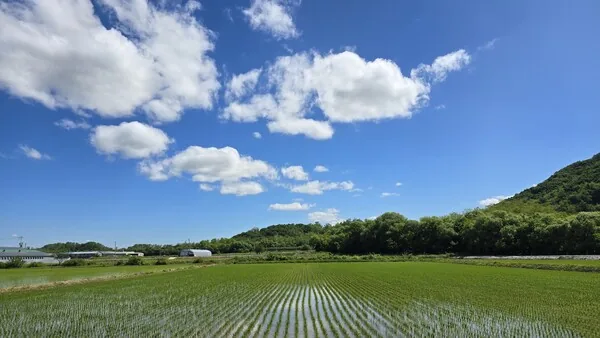
노동당사로 가면서 남한에 왠 <노동당사> 냐구요? 김 기사가 물었습니다. 그랬더니 그 지역에서 군목으로 봉사한, 라이딩 파트너 김 목사가 설명합니다. 본래는 38선으로 남북이 나뉘어 있을 때는 북한 땅이었고 그래서 거기에 <노동당사>가 있었는데, 625 전쟁이 끝나면서 휴전선이 그어질 때 남한 땅이 되었기 때문이라고요^^ 현재는 역사공원으로 다듬어지는 중이었습니다. 철원에서 출발해서 연천읍 차탄교까지는 참으로 감탄할만한 자전거 트레일이었습니다. 일단 내리막 길이고 좌우의 벌판에는 모내기가 끝나고, 달리는 길 좌우에는 금계국 꽃들이 반기고, 시원한 바람은 뒤에서 불어주고, 평야에서 보는 푸른 하늘 흰구름은 남태평양을 떠올리는 멋진 풍광이었습니다.
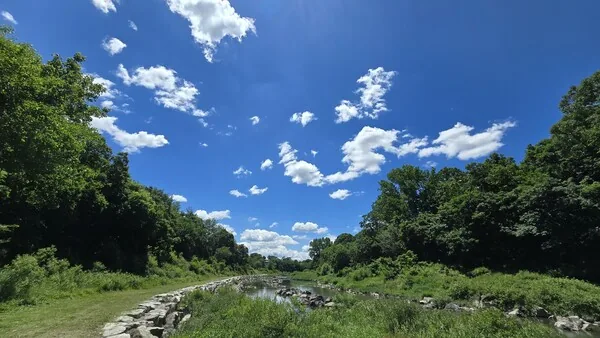
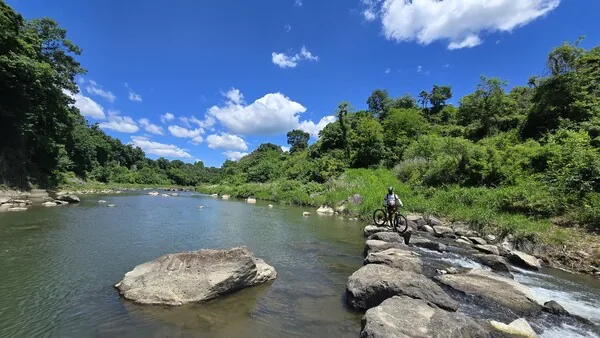
평화누리 자전거길 표시를 따라 잘 내려오다가 안내판을 따라 갔는데 다시 원점이어서 연천군에 문의할 수도 없고 ㅠㅠ 거기서부터는 시련의 코스가 시작되었습니다. 차탄교 부근 <지혜로>에서 지혜를 잃고 말았습니다. 게다가 결정적인 실수는 “길이 아니면 가지를 말고 말이 아니면 갋지를 말라”는 옛어르신 말을 귀담아 듣지 않은 것입니다. 분명 <차량출입금지>라는 표시와 함께 길을 막아놓았는데, 자전거는 차가 아니니까 갈 수 있다는 해석적 오류를 범했습니다. 막아놓은 철책을 넘어서서 주상절리를 향해서 강을 따라 달렸습니다. 그 강이 차탄강인지 한탄강인지도 모르지만, 막 풀을 깎아놓은 향긋한 풀내음을 맡으며 달리다가, 풀깍는 분들을 만나 계속 가면 되느냐고 물었더니, 큐싸인을 주셔서 MTB의 본능을 발휘하며 달렸는데, 드뎌 강을 건너는 큰 바위로 된 징검다리를 만나 자전거를 밀면서, 때로는 들고 뛰어 건너기도 하고 …
애써서 강을 건넜지만, 거기서는 길을 찾을 수 없어 돌아설 수 밖에 없었습니다. 다행히 멀지 않은 곳에 논두렁 옆의 나무 그늘에 의지해서 수제샌드위치로 점심을 먹을 수는 있었습니다. 그리고 다시 달린 길의 이름은 <은대로> 였던 것 같고, 결국은 <한반도통일미래센터>에서 또 한 번 돌아서야 했습니다. 하지만 차량전용다리처럼 보이는 <마포대교>를 건널 수 없으니, 휴대폰으로 자전거길을 탐색하니 또 우리를 <한반도통일미래센터>로 인도했습니다. 우리가 가야할 길은 고생이 되어도, 한반도 통일을 향한 길이 분명했습니다. 뒤에는 간식도 비상식품도 물도 바닥이 났는데 휴대폰 밧데리조차 가물거리고, 결국은 길가의 <화석정>부근의 음식점에 들어가서 전화를 빌려, 우리의 희망 김 기사의 도움을 청했습니다. 거기서 늦은 저녁을 먹고, 임진각 대신 화석정 부근에서 약 97.5킬로의 장정을 마감했습니다.
Spring and autumn seem to be wonderful seasons for cycling. The clear weather on Tuesday, May 28, was especially ideal for a spring ride. Our plan for the day was to start at the Workers' Party Headquarters (Nodongdangsa) in Cheorwon-gun, Gangwon-do, and cycle about 90 kilometers all the way to Imjingak in Paju-gun. However, through unexpected twists and turns, we ultimately ended our journey at Hwaseokjeong Pavilion. It was also a day of trying something completely new. We installed a bike rack on our car, carried two bicycles up to Cheorwon to start, and planned to load them up again for the journey home—our very first attempt at what is fondly called a "boss's ride." It is called a "boss's ride" because it is only possible when someone supports you with a vehicle. That day, my wife, "Driver Kim," worked tirelessly for us.
On the way to the Labor Party Headquarters, Driver Kim asked, "Why on earth is there a 'Labor Party Headquarters' in South Korea?" Pastor Kim, my riding partner who had previously served in that area as a military chaplain, explained: Originally, when North and South were divided along the 38th parallel, this region belonged to the North, which is why the Workers' Party building stood here. But when the armistice line was drawn at the close of the Korean War, it became South Korean territory. Currently, the site is being restored and developed into a historical park. The bicycle trail leading from Cheorwon down to Chatan Bridge in Yeoncheon-eup was truly magnificent. To begin with, it was a gentle downhill route. In the fields to our left and right, rice planting was already complete; golden coreopsis blossoms greeted us on both sides of the path; a refreshing breeze blew from behind; and looking up from the open plains, the blue sky dotted with white clouds created a breathtaking landscape reminiscent of the South Pacific.
We were coasting down smoothly following the markers of the Pyeonghwa Nuri Bicycle Path, but after following a guide sign, we found ourselves right back where we started. Since we couldn't just call Yeoncheon County Hall for directions, our course of trials began right there. Around (Wisdom Road) near Chatan Bridge, we completely lost our wisdom. Furthermore, our most decisive blunder was failing to heed the old adage: "If it is not a path, do not walk it; if it is not proper speech, do not speak it." The road was clearly barricaded with a sign reading , but we committed an interpretive blunder, rationalizing that a bicycle is not an automobile, so we could surely pass. Slipping past the iron barrier, we rode along the river toward the columnar joints. Not even knowing for sure whether the river was the Chatan or the Hantan, we pedaled on, breathing in the fragrant scent of freshly mown grass. When we met workers cutting the grass, we asked if we could keep going, and they gave us a reassuring nod. Tapping into our mountain biking instincts, we surged ahead, until we finally encountered a stepping-stone crossing made of massive boulders across the river. Pushing our bikes, and at times hoisting them onto our shoulders as we leaped across the stones . . .
We labored to cross the river, but once on the other side, no path could be found, and we had no choice but to turn back. Fortunately, not far away, we found shade under a tree by the edge of a rice paddy, where we were able to rest and enjoy homemade sandwiches for lunch. The road we took next seemed to be called , and eventually, we had to turn around once more at the . But because we could not cross , which appeared to be reserved exclusively for motor vehicles, we searched for bicycle routes on our phones—only for the navigation to lead us back to the yet again. Even if hardships marked our journey, it seemed clear that our path was bound for the unification of the Korean Peninsula! Before long, our snacks, emergency rations, and water ran completely dry, and even our phone batteries flickered on the verge of dying. In the end, we stepped into a roadside restaurant near to borrow a phone and call for help from our beacon of hope, Driver Kim. After sharing a late dinner there, we brought our long expedition of approximately 97.5 kilometers to a close near Hwaseokjeong instead of Imjingak.
Die lente en herfs voel voorwaar soos die heel beste seisoene om fiets te ry. Veral in sulke helder weer soos verlede Dinsdag, 28 Mei, was dit ideaal vir ’n lentefietsrit. Ons plan vir die dag was om by die Arbeidersparty-hoofkwartier (Nodongdangsa) in Cheorwon-gun, Gangwon-do, te vertrek en sowat 90 kilometer ver te ry tot by Imjingak in Paju-gun. Maar na allerhande ompaaie en wedervaringe het ons tog maar by die Hwaseokjeong-pawiljoen halt geroep. Dit was ook ’n dag waarop ons iets heel nuuts aangepak het. Ons het ’n fietsrak aan die motor gemonteer, twee fietse tot in Cheorwon vervoer om daar te begin trap, en beplan om hulle met die terugreis weer op te laai—ons heel eerste poging tot ’n sogenaamde "baas-rit." Dit word so genoem omdat dit slegs moontlik is as iemand met ’n motor jou bystand bied. Daardie dag was my vrou, ons getroue "Bestuurder Kim," die een wat al die opofferings gemaak het.
Op pad na die Arbeidersparty-hoofkwartier het Bestuurder Kim gevra: "Waarom op aarde is daar ’n 'Arbeidersparty-hoofkwartier' in Suid-Korea?" Ds. Kim, my fietsrymaat wat voorheen as weermagkapelaan in daardie omgewing gedien het, verduidelik toe: Oorspronklik, toe die Noorde en Suide langs die 38ste breedtegraad verdeel was, was dit Noord-Koreaanse grondgebied, en daarom het die Arbeidersparty-gebou daar gestaan. Maar met die totstandkoming van die wapenstilstandslyn aan die einde van die Korea-oorlog het dit Suid-Koreaanse grond geword. Tans word die terrein omskep in ’n historiese park. Die fietsroete vanaf Cheorwon tot by die Chatan-brug in Yeoncheon-eup was werklik iets om oor te verwonder. Eerstens was dit ’n afdraande pad, die ryslande aan weerskante was pas klaar beplant, gousblomme (coreopsis) het ons langs die pad verwelkom, ’n koel briesie het van agter gewaai, en die blou lug met wit wolke oor die oop vlaktes het ’n asemrowende uitsig gebied wat ’n mens aan die Suid-Stille Oseaan laat dink het.
Ons het fluks afgery volgens die tekens van die Pyeonghwa Nuri-fietsroete, maar nadat ons ’n aanwysingsbord gevolg het, het ons weer net daar beland waar ons begin het. Aangesien ’n mens nie sommer die Yeoncheon-distrikskantoor kon skakel vir raad nie, het ons beproewingsroete daar begin. Naby die Chatan-brug, op (Wysheidspad), het ons ons wysheid heeltemal verloor. Bowendien was ons deurslaggewende flater dat ons nie ag geslaan het op die ou spreekwoord nie: "As dit nie ’n pad is nie, moet dit nie bewandel nie; as dit nie behoorlike woorde is nie, moet dit nie spreek nie." Die pad was duidelik versper met ’n bordjie wat lui , maar ons het ’n interpretasiefout begaan deur te redeneer dat ’n fiets nie ’n motor is nie en dat ons dus mag deurgaan. Ons het verby die ysterheining geglip en al langs die rivier in die rigting van die basaltrotsformasies getrap. Sonder om eers seker te wees of dit die Chatan- of die Hantan-rivier was, het ons voortgery terwyl ons die heerlike geur van varsgesnyde gras ingeasem het. Toe ons die grasnyers teëkom en vra of ons kan aanhou ry, het hulle ons ’n instemmende teken gegee. Ons het ons bergfiets-instinkte ingespan en vorentoe gebeur, totdat ons uiteindelik by ’n stapklippad van reuse rotse oor die rivier gekom het. Ons het die fietse gestoot en soms selfs opgelig terwyl ons van klip tot klip gespring het . . .
Met groot moeite het ons die rivier oorgesteek, maar aan die oorkant kon ons geen pad vind nie en moes ons noodgedwonge omdraai. Gelukkig kon ons nie ver daarvandaan nie in die koelte van ’n boom langs ’n rysakker uitrus en ons tuisgemaakte toebroodjies vir middagete geniet. Die pad wat ons daarna gevolg het, het gelyk soos , en uiteindelik moes ons by die weer ’n slag omdraai. Omdat ons egter nie oor die , wat blykbaar net vir motors bedoel is, kon gaan nie, het ons op die selfoon na fietsroetes gesoek—net om weer eens teruggelei te word na die ! Al was die pad swaar, was dit duidelik dat ons bestemming op een of ander manier gerig was op die hereniging van die Koreaanse Skiereiland. Teen daardie tyd was ons peuselhappies, noodvoorrade en water heeltemal op, en selfs ons selfoonbatterye was aan die doodloop. Uiteindelik het ons by ’n eetplek langs die pad naby ingestap, ’n telefoon geleen en ons baken van hoop, Bestuurder Kim, om hulp gevra. Nadat ons daar ’n laat aandete geniet het, het ons ons lang tog van sowat 97,5 kilometer naby Hwaseokjeong voltooi in plaas van by Imjingak.